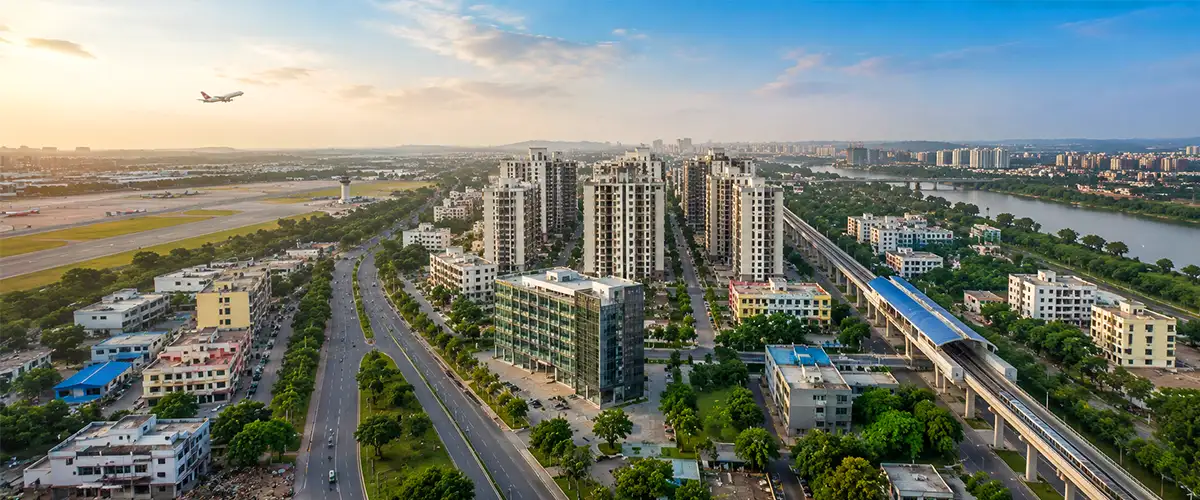
Mumbai continues to expand beyond its traditional boundaries, shaping new zones that redefine urban living and investment potential. One such rapidly emerging region lies toward Navi Mumbai, where structured planning, large infrastructure projects, and improved connectivity are coming together to form a next-generation city ecosystem. This transformation is not just about expansion; it reflects a shift toward balanced living supported by education hubs, green environments, and seamless transport networks.
The region around Panvel is gaining attention for its strategic location and long-term development vision, making it one of the most closely watched growth corridors in the Mumbai Metropolitan Region.
The Rise of a Planned Urban Extension Near Navi Mumbai
The evolution of this belt is driven by large-scale infrastructure planning and strong real estate momentum. As Mumbai becomes denser, the surrounding regions are being developed with a focus on decentralised growth, ensuring better livability and reduced congestion in core areas.
Panvel is now positioned as a major anchor point in this expansion, connecting older Mumbai zones with upcoming satellite developments and future-ready infrastructure.
In this emerging landscape, early developments like Mumbai 2.5 are reflecting how integrated planning and connectivity-led growth are shaping new residential expectations.
This evolution is further strengthened by visionary developments such as Kanakia Mumbai 2.5, which align with the broader direction of structured urban expansion and lifestyle-driven planning.
Connectivity, Airport Growth & Mobility Transformation
One of the strongest forces shaping this region is its connectivity advantage. With upcoming transport upgrades, expressway enhancements, and metro expansions, the area is becoming increasingly accessible from key parts of Mumbai and Navi Mumbai.
A defining factor is the upcoming international aviation hub that is expected to significantly influence residential and commercial demand patterns. This is creating a ripple effect across nearby micro-markets, encouraging long-term settlement and business interest.
In this evolving environment, Codename Mumbai 2.5 represents the new wave of integrated urban development that benefits directly from infrastructure-led transformation.
The corridor linking Mumbai and Navi Mumbai is also witnessing rising demand due to improved road networks and reduced travel time across business districts and employment hubs. This has positioned the region as a preferred alternative for future-focused homebuyers.
Another key development reflecting this shift is Mumbai 2.5 Panvel, which highlights the growing importance of location-driven planning in emerging urban zones.
Education, Environment & Balanced City Planning
Modern urban development is no longer limited to housing; it now integrates learning environments, open spaces, and lifestyle infrastructure. The Panvel region is witnessing steady growth in educational institutions, skill development centres, and knowledge-driven ecosystems that cater to new-age professionals and families.
At the same time, green planning is being prioritised to ensure long-term sustainability. Open landscapes, reserved natural zones, and structured layouts are becoming central to new developments. This balance between infrastructure and environment is shaping a healthier urban experience compared to older congested city pockets.
Within this framework, Kanakia Mumbai 2.5 Panvel reflects how integrated planning is aligning residential spaces with long-term environmental and infrastructural balance.
The presence of such developments indicates a shift toward future-ready urban design where livability and accessibility work together rather than in isolation.
Investment Outlook & Future City Expansion Potential
The long-term growth potential of this region is closely tied to infrastructure execution and demand migration from saturated city zones. As connectivity improves and civic development expands, property values are expected to reflect the area’s strategic importance.
Early positioning in such corridors often benefits from gradual appreciation cycles driven by infrastructure completion and population movement. Codename Mumbai 2.5 Panvel makes the region attractive for both end-users and long-term planners looking at stable growth environments. It represents the evolving identity of a region that is transitioning into a structured urban hub with strong future prospects.
The combination of airport proximity, transport upgrades, and planned residential clusters is steadily reshaping how this belt is perceived in the broader Mumbai real estate landscape.
Explore the Future of Connected Living
The transformation around Panvel is not a short-term trend but part of a larger urban evolution. As infrastructure projects progress and lifestyle expectations shift, this region is set to become one of the most influential growth corridors in the Mumbai Metropolitan Region.
For those looking to understand upcoming opportunities and explore future-ready residential environments, this is the right time to stay informed and take early positioning.
Connect today to explore upcoming developments, site plans, and early access opportunities in Mumbai’s fastest-growing corridor.
Visit us: mumbai25.com
Call at: +91 8624040557